
19 Products





PEEK Screws
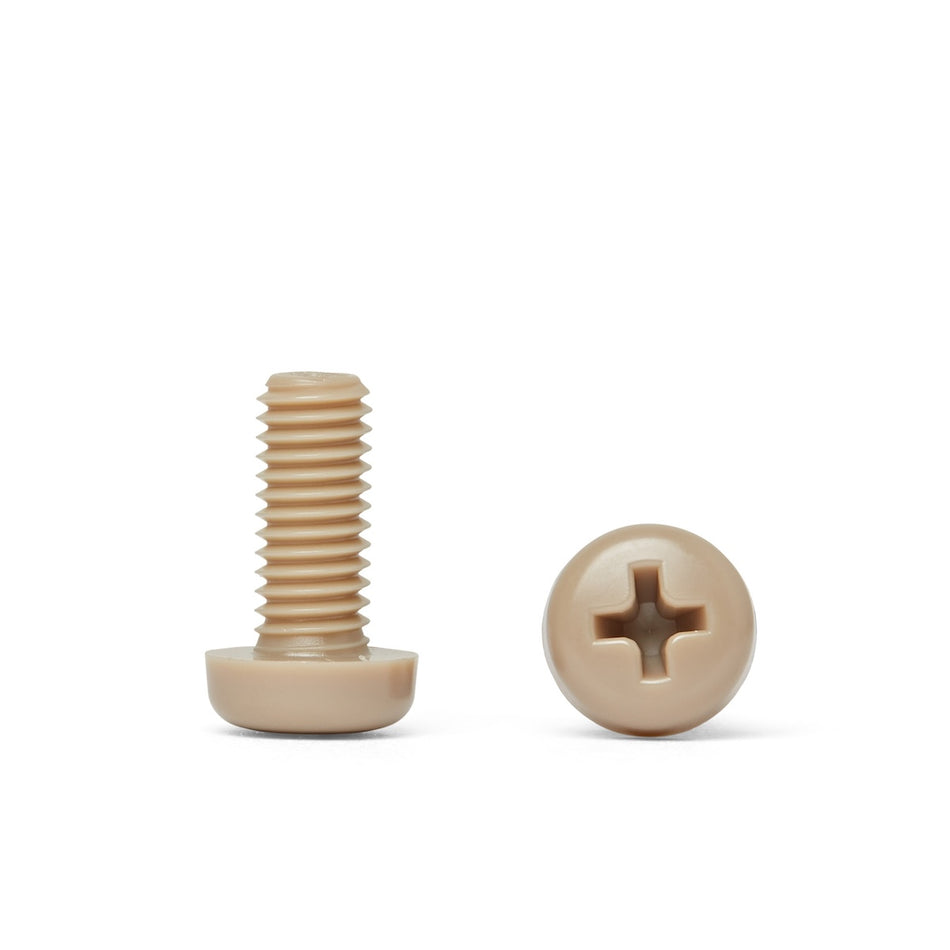
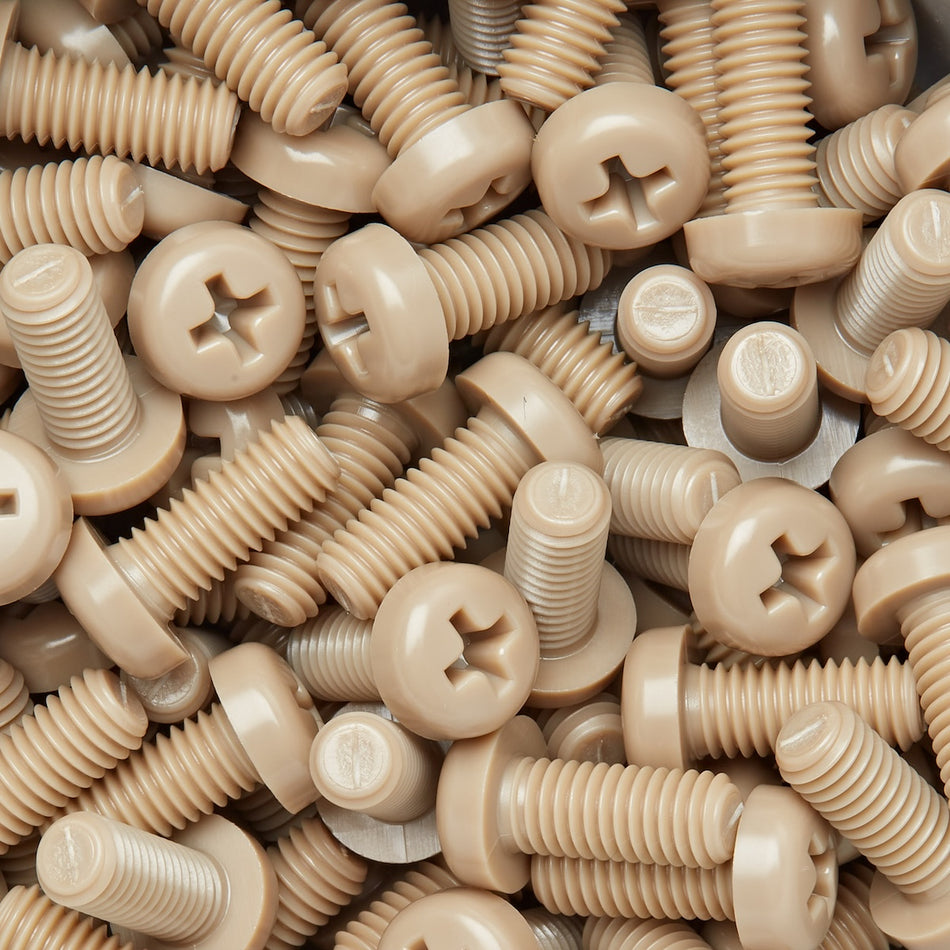
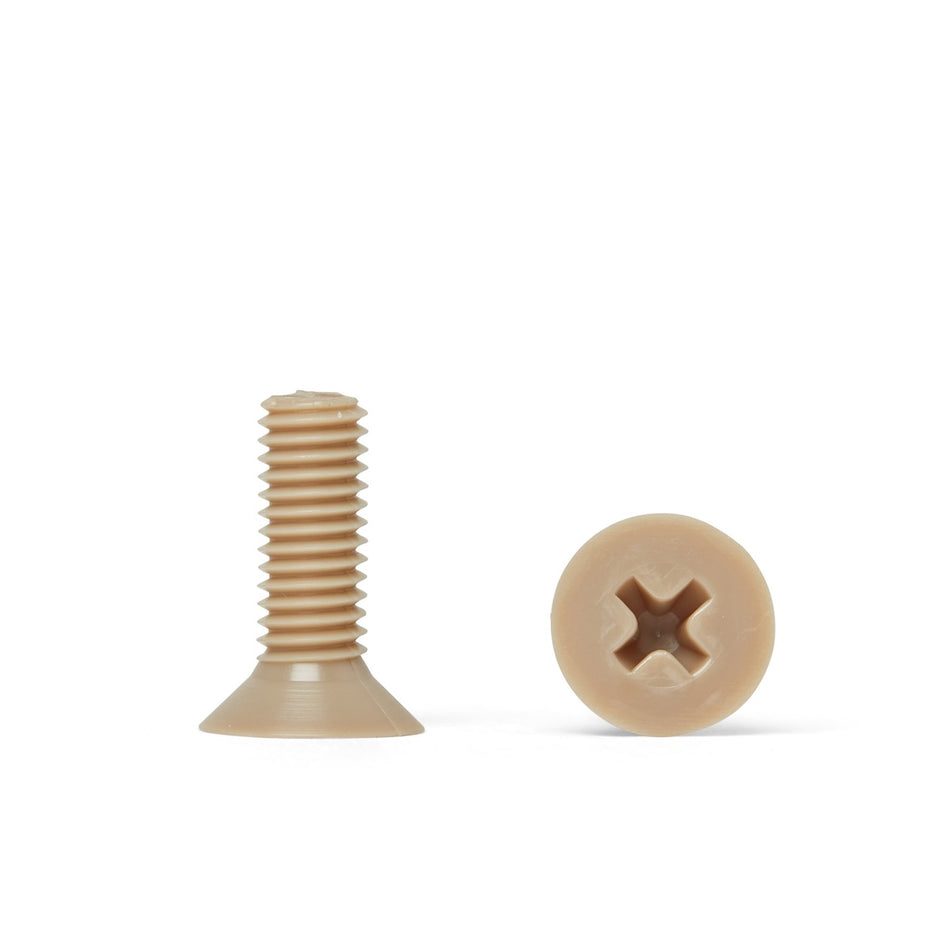
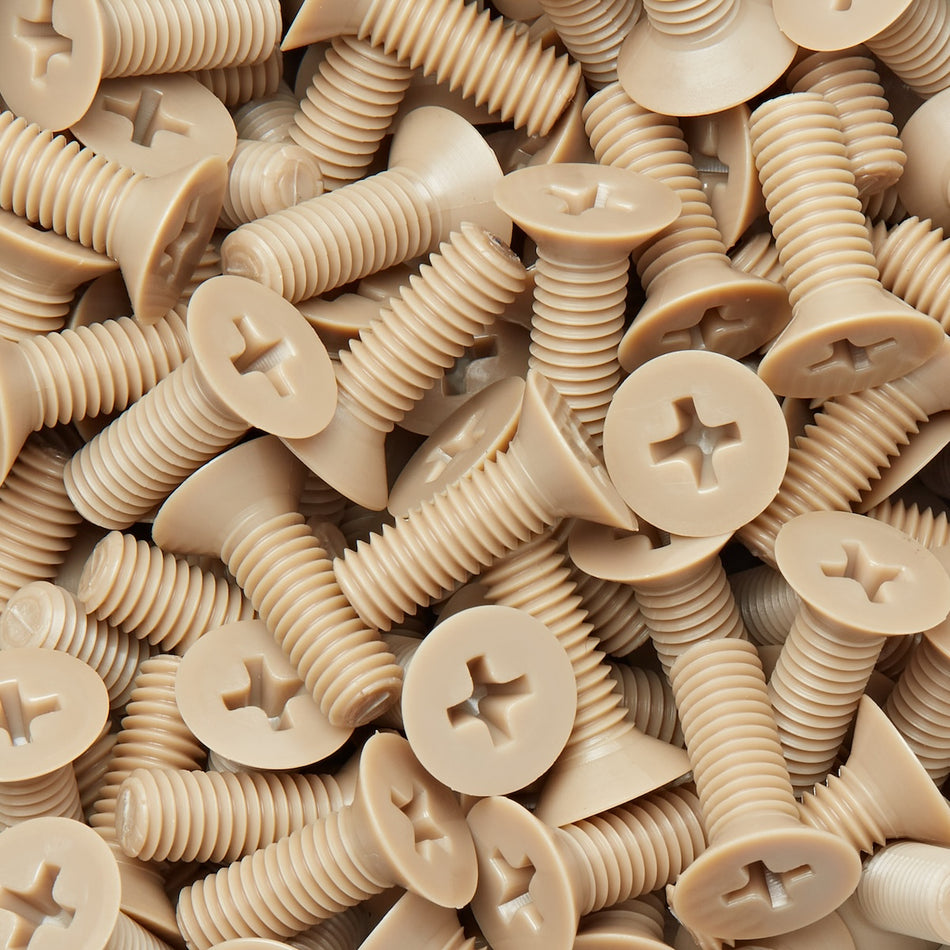
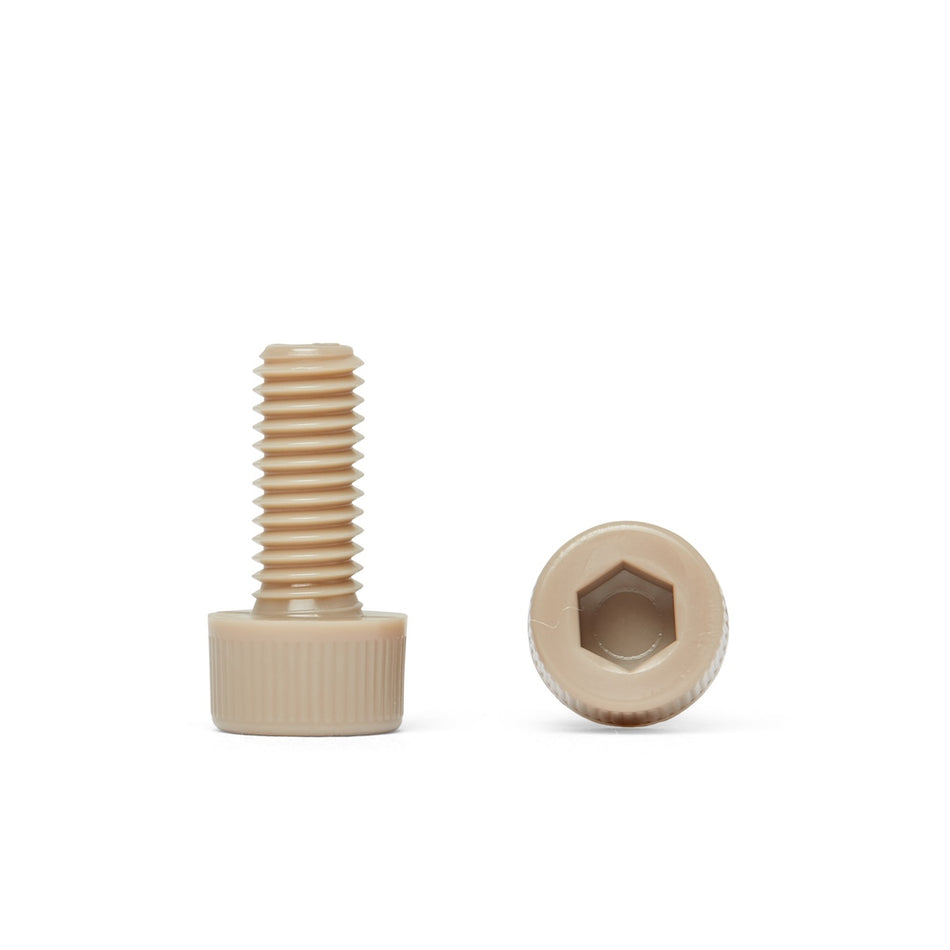
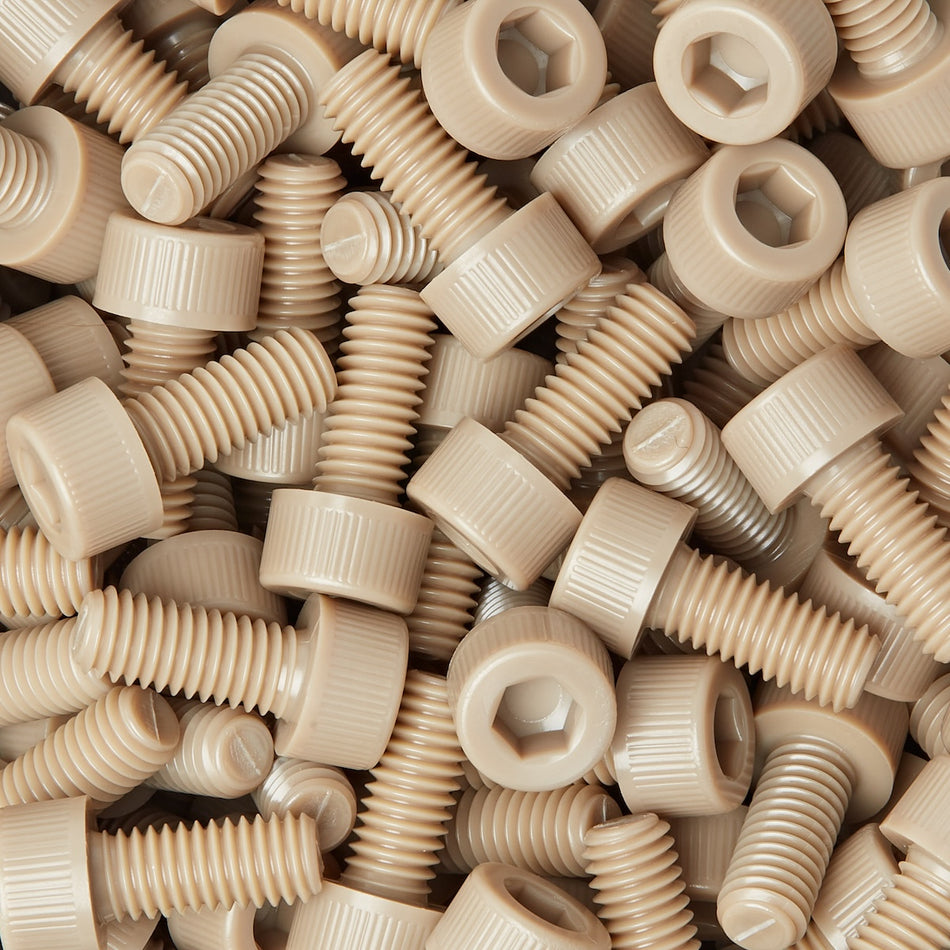
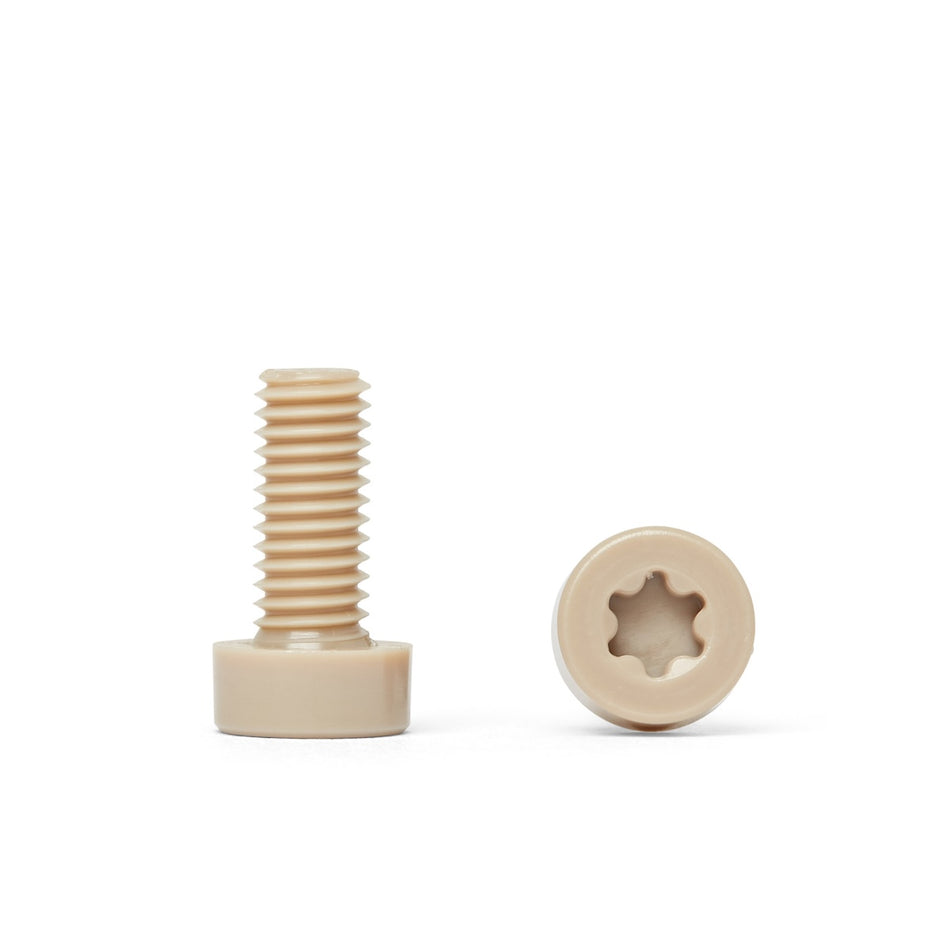
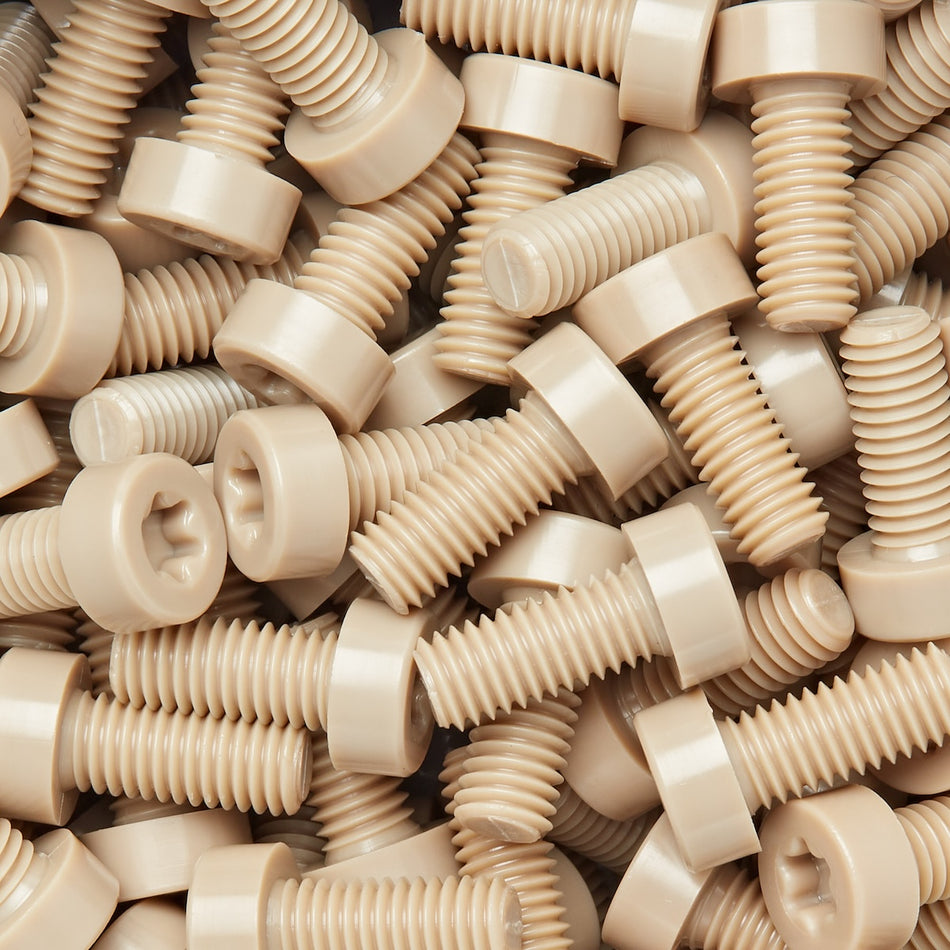
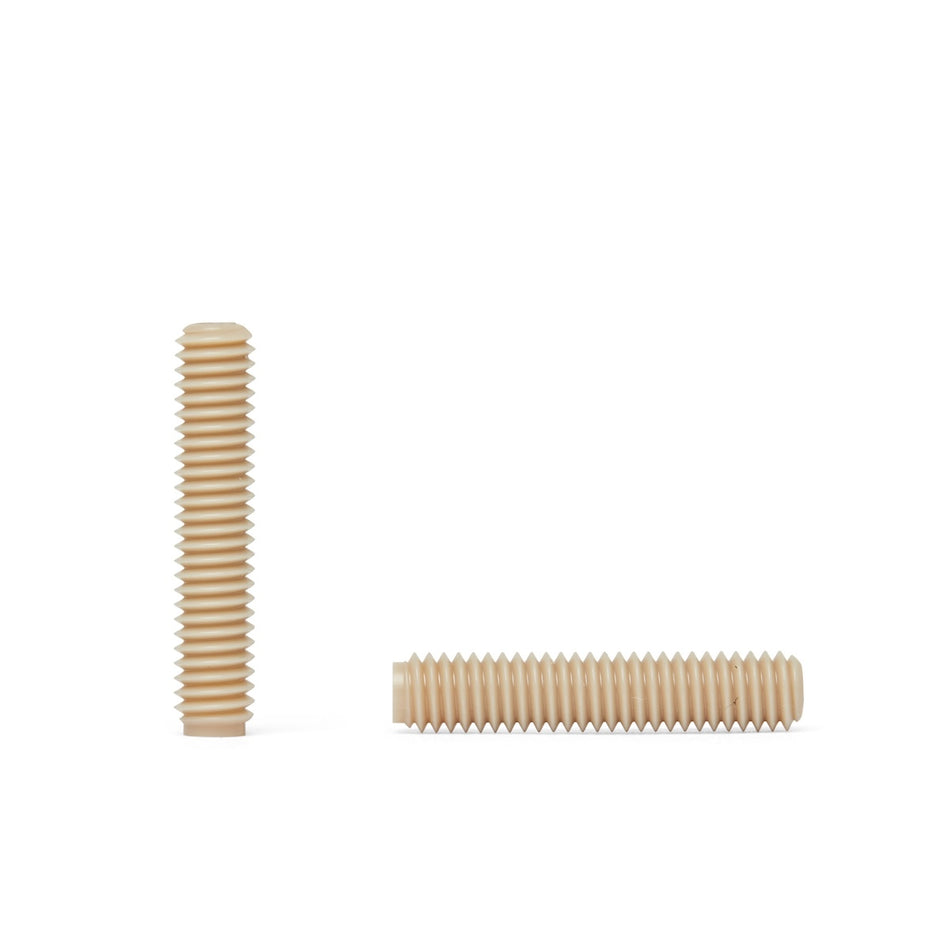
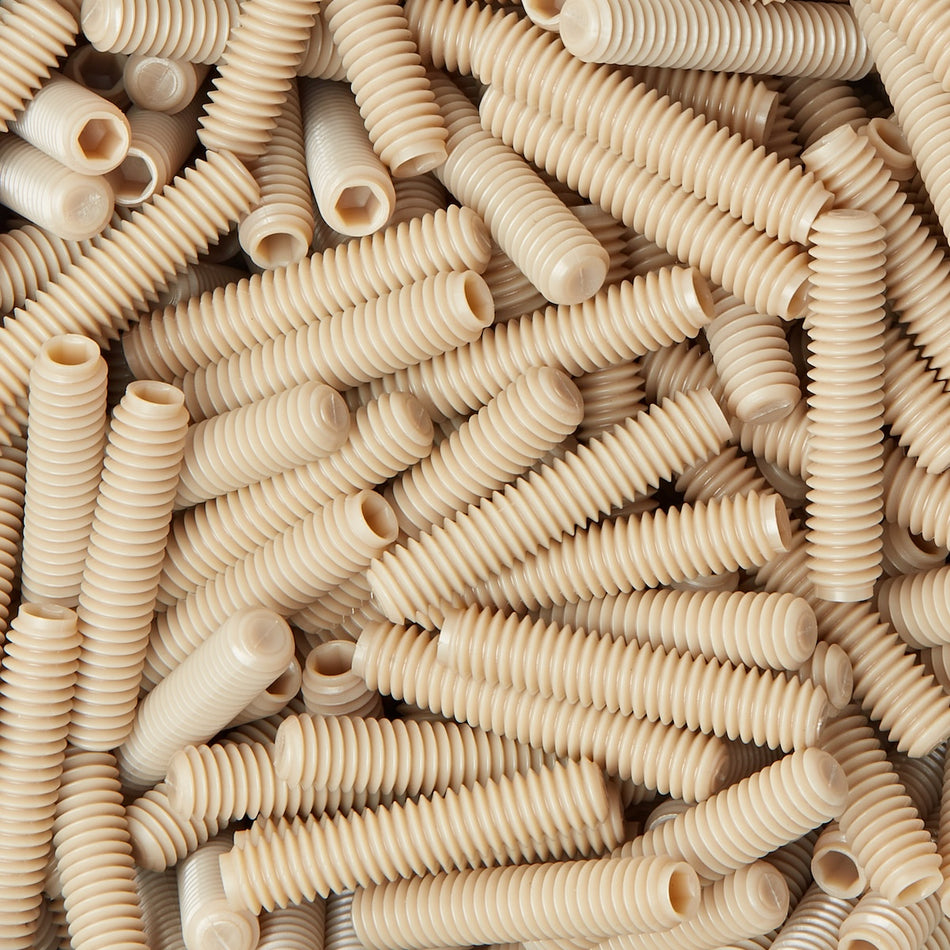
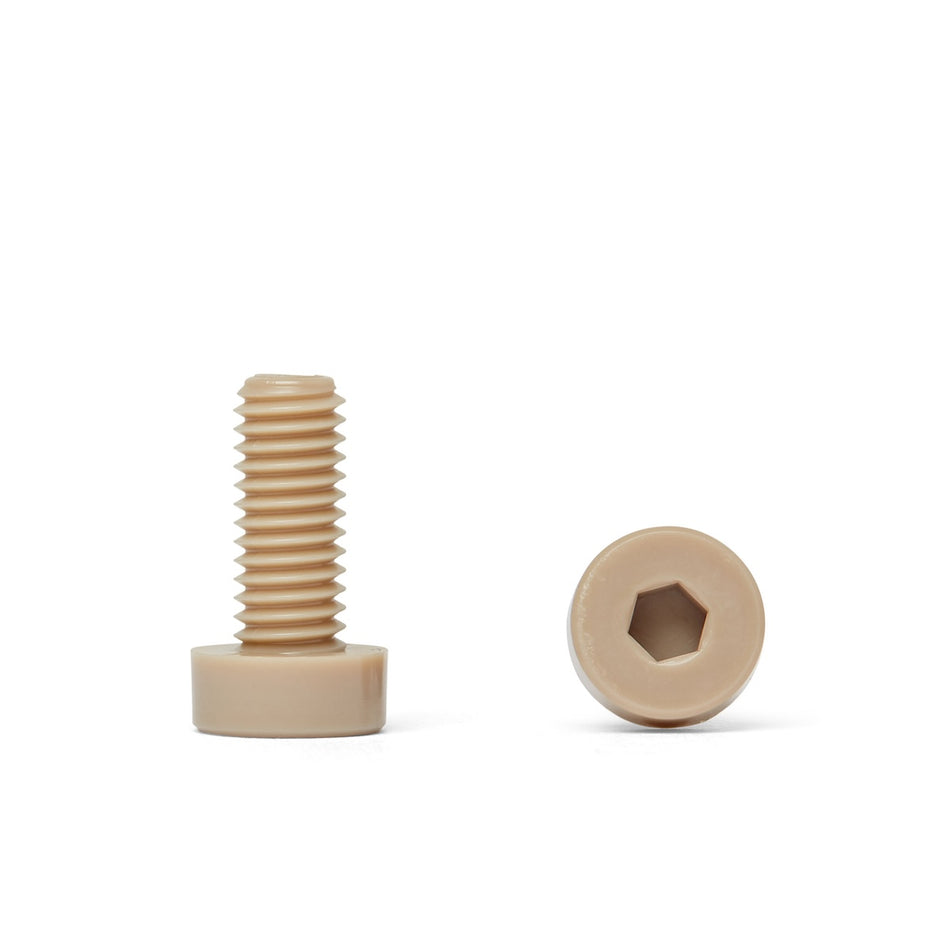
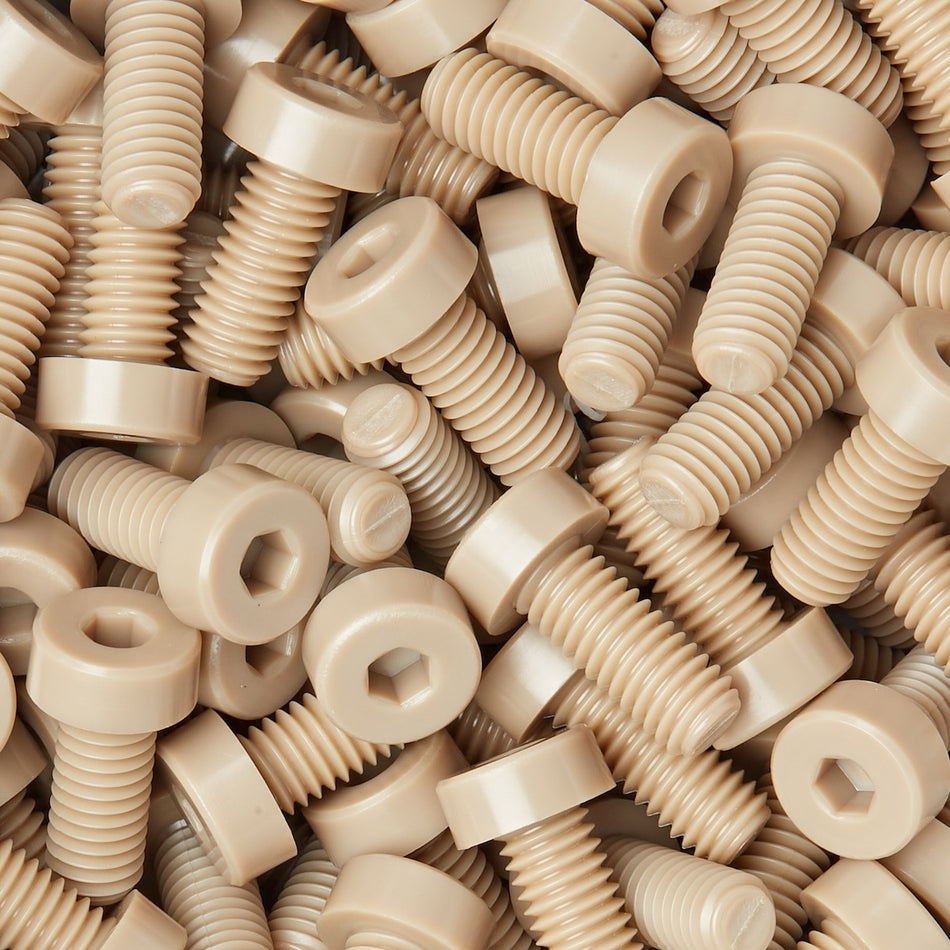
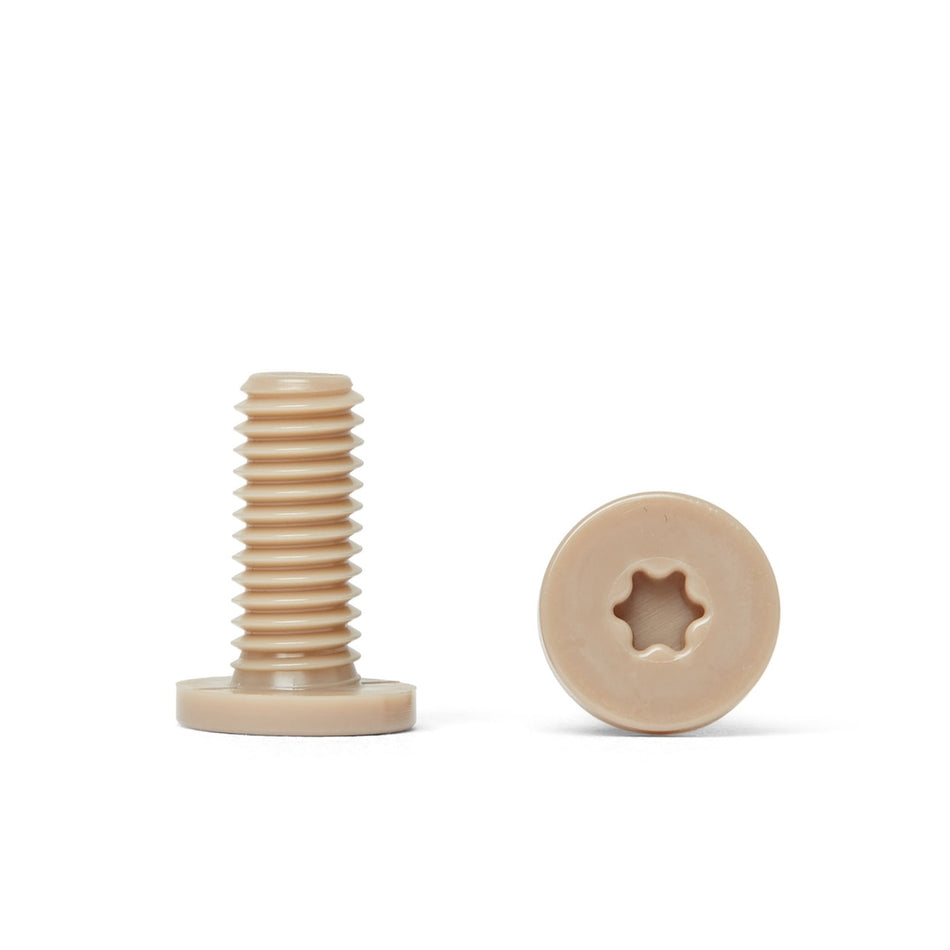
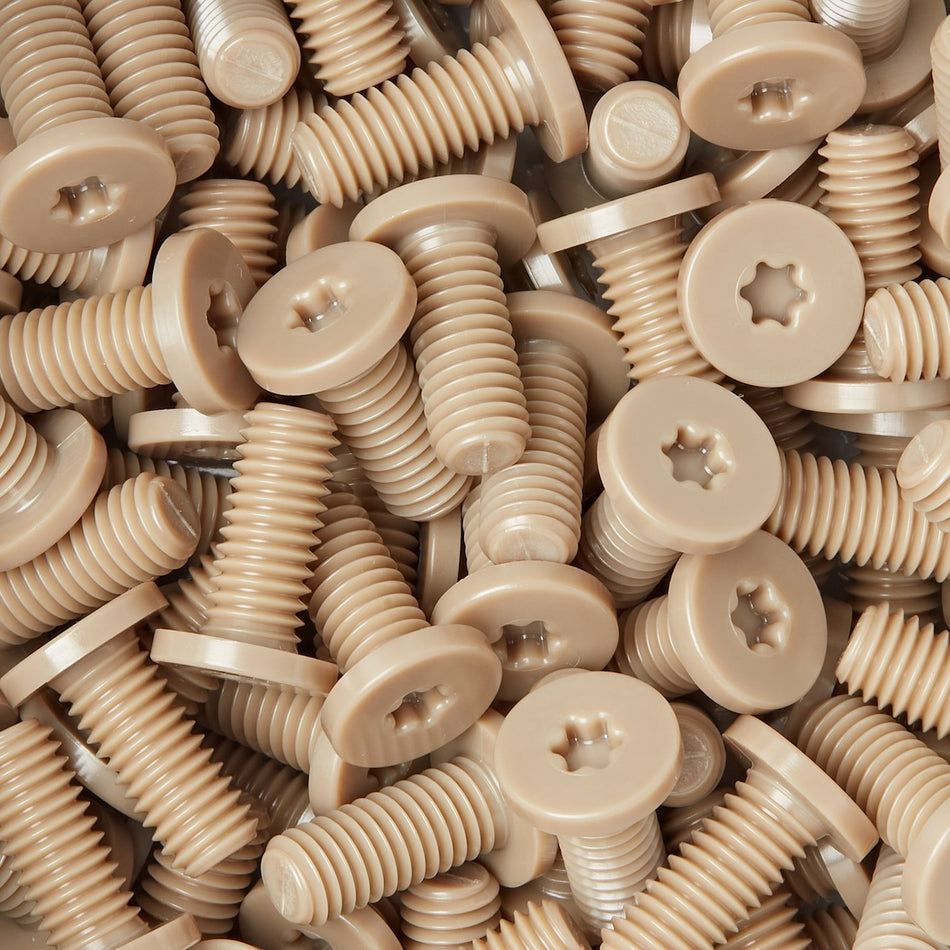
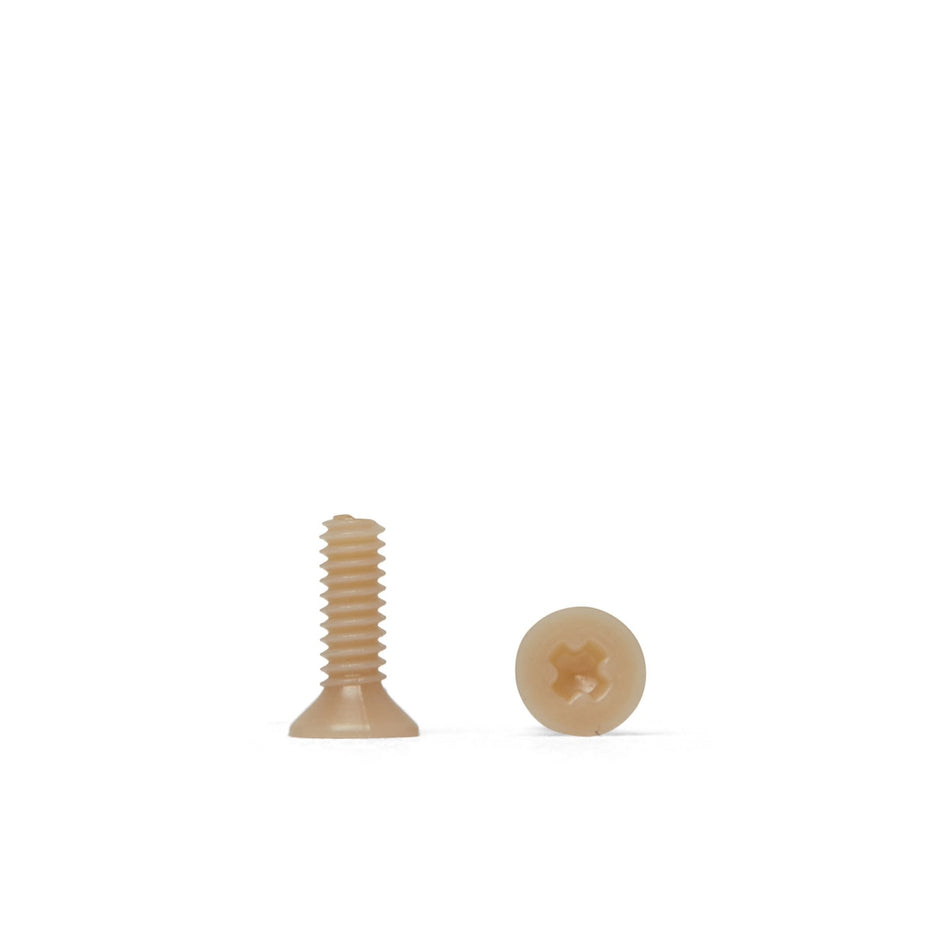
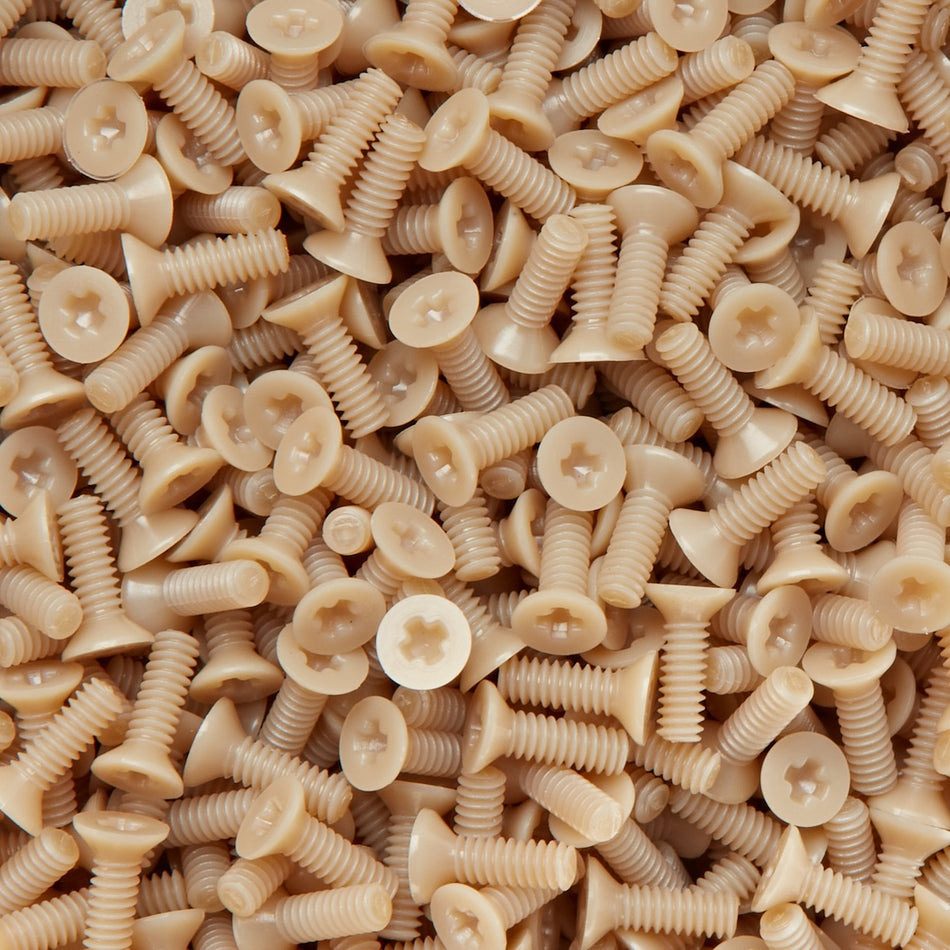
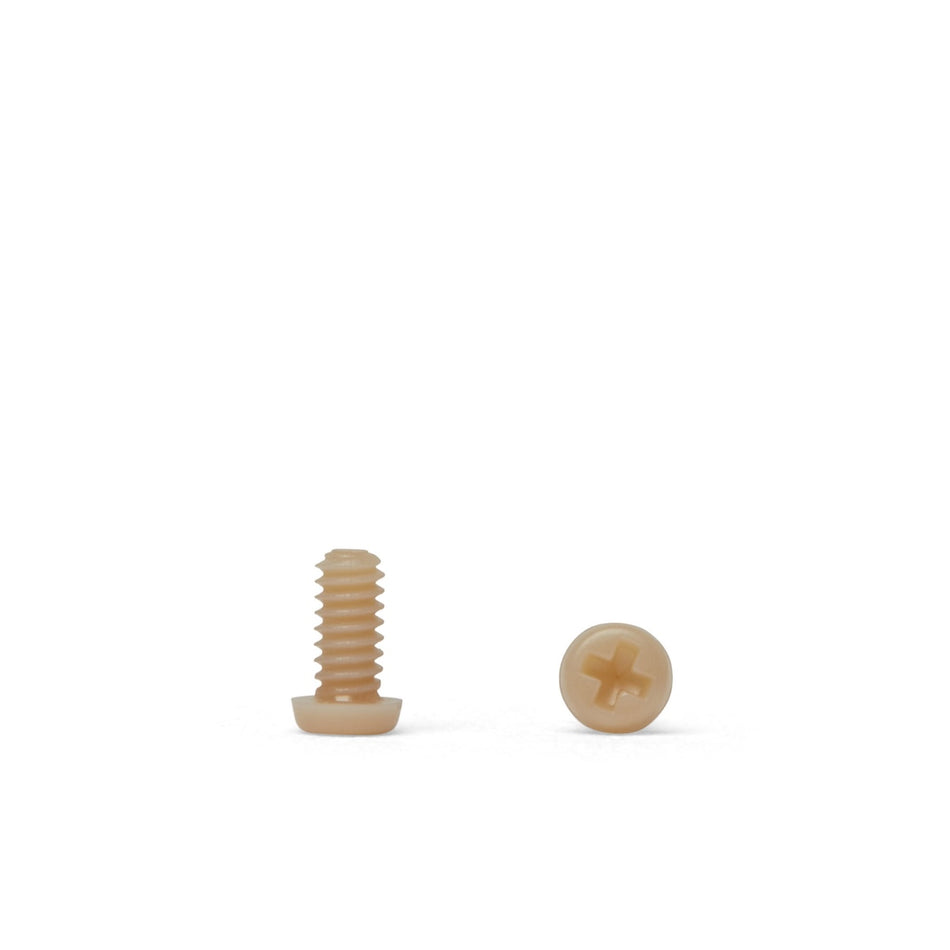
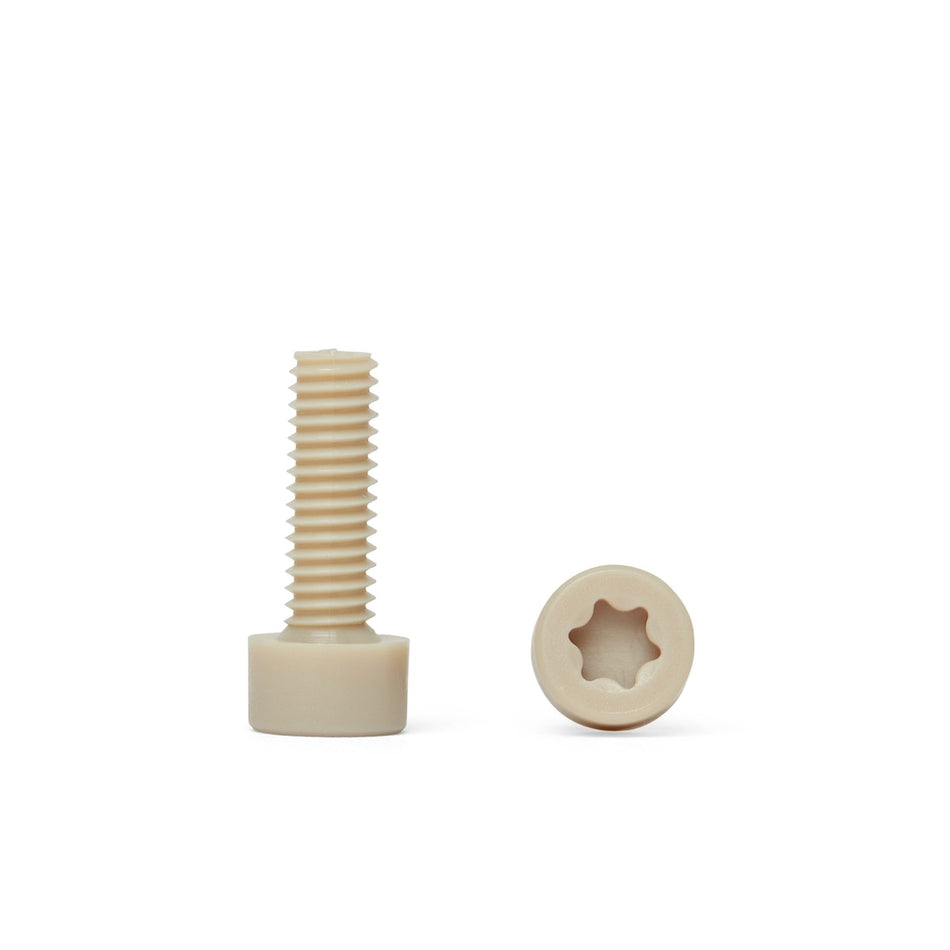
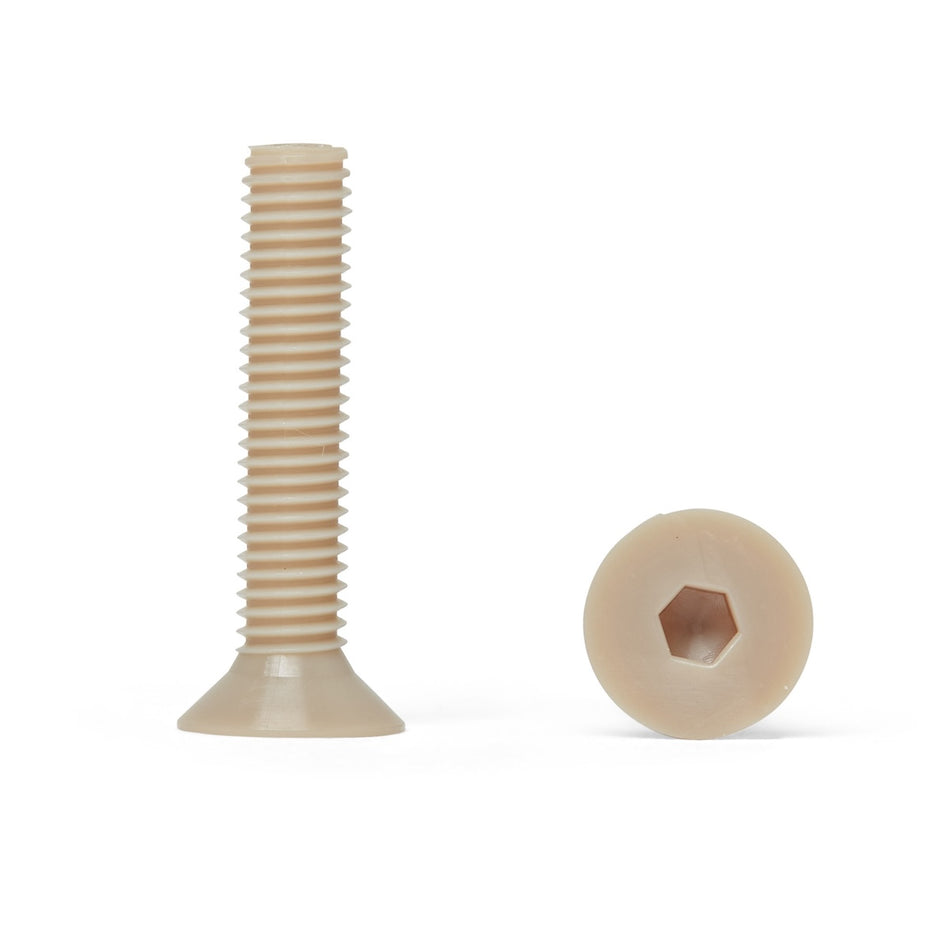
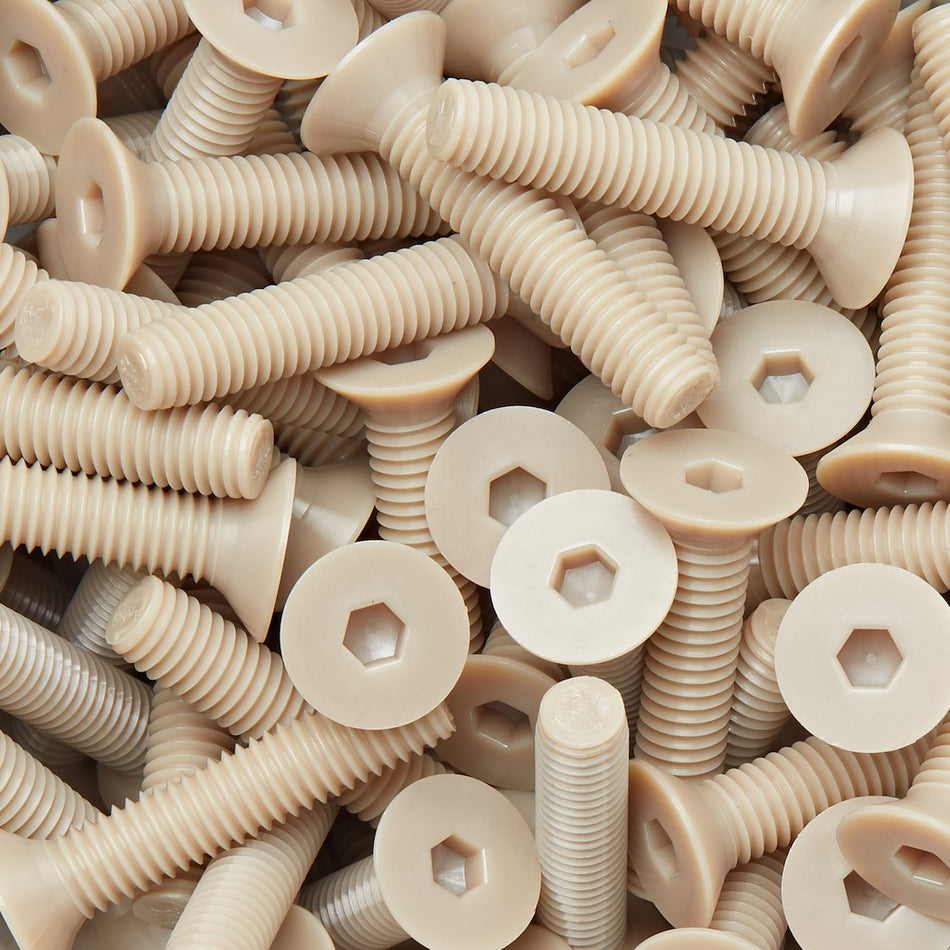
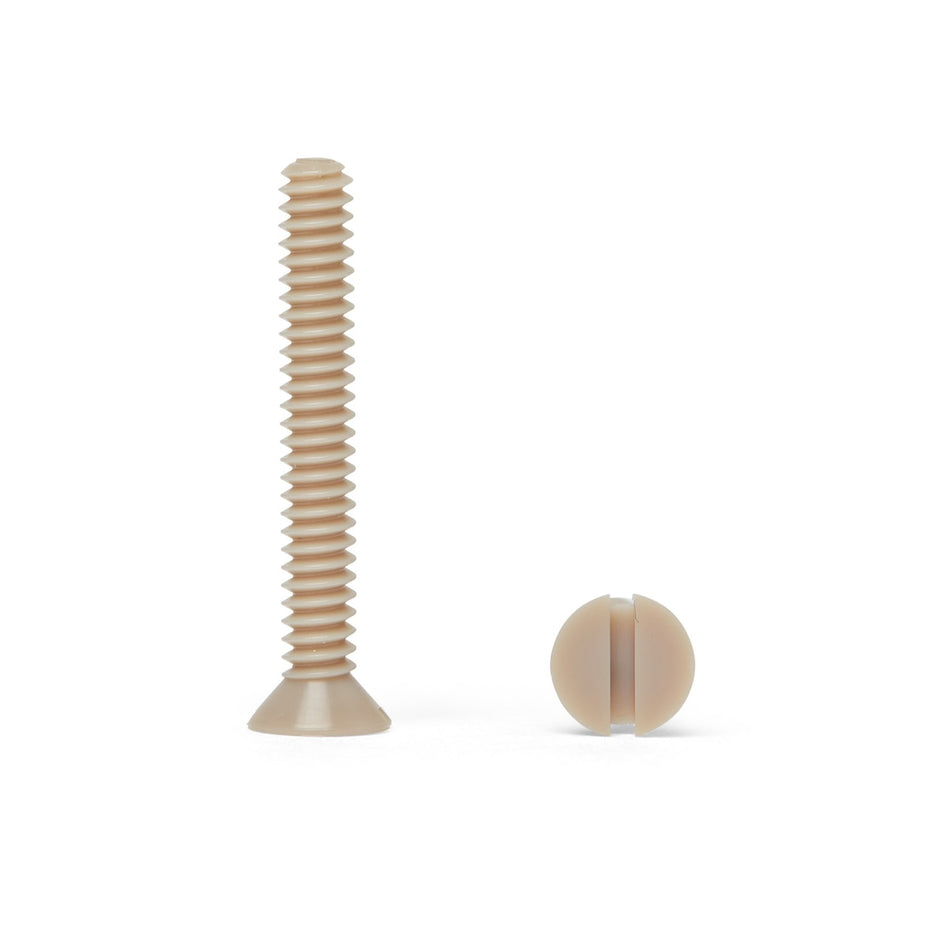
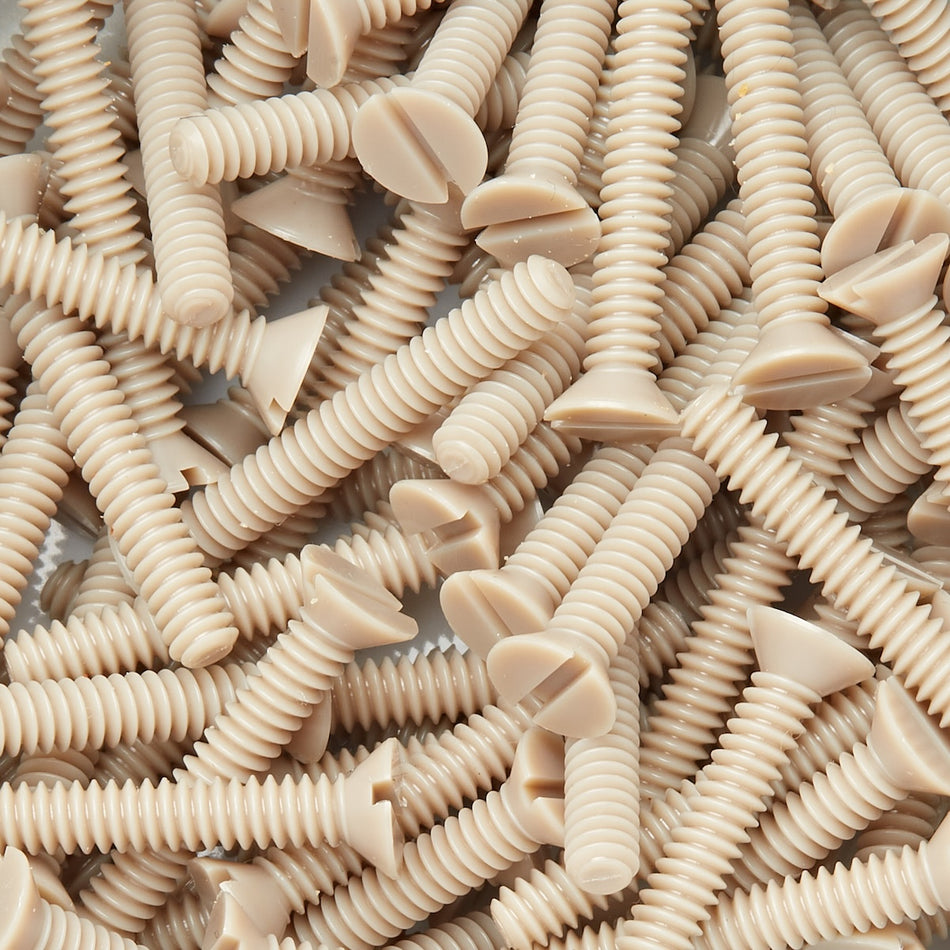
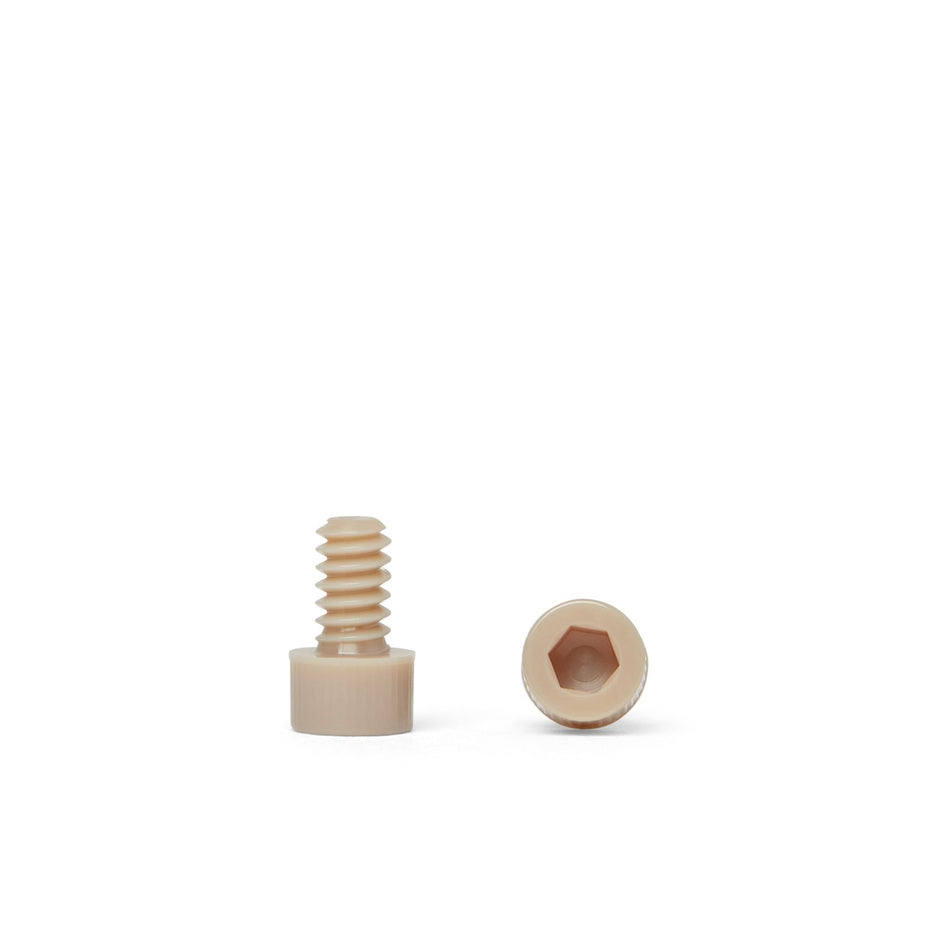
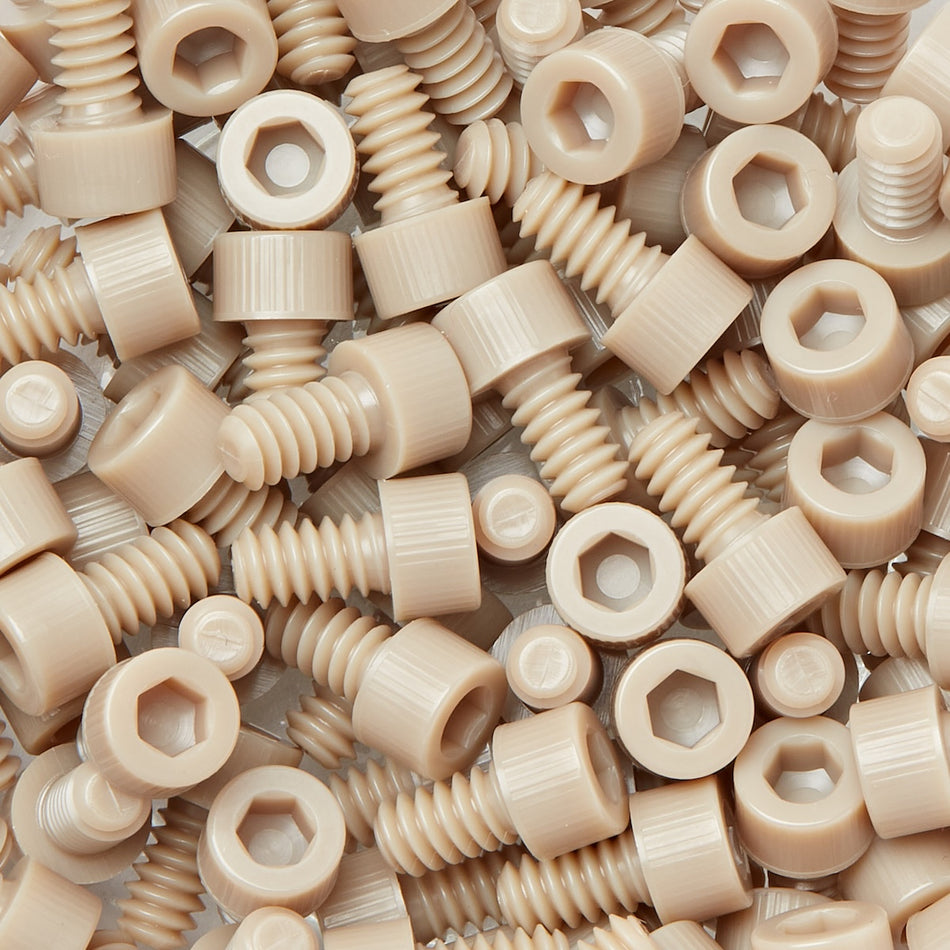
Shop PEEK screws for applications that require lightweight, electrically insulating fasteners with good resistance to heat and chemicals. Choose from pan head, countersunk, hex socket cap, low and ultra-low Torx®-style hexalobular, slotted cheese head, micro and headless grub screws. The right head style depends on how much clearance you have, how the screw needs to seat and which tools you can use to reach it.
What is PEEK?
PEEK stands for polyether ether ketone. It is a semi-crystalline engineering thermoplastic used in components that need to combine mechanical strength, electrical insulation and resistance to heat and chemical exposure. Unfilled PEEK has a low density and absorbs relatively little moisture, making it useful in precision assemblies where weight and dimensional stability matter. Chemical compatibility depends on the substance, concentration, temperature and exposure time.
What are PEEK screws used for?
PEEK screws are threaded polymer fasteners used to secure, locate or adjust components. Typical applications include mounting circuit boards and insulating brackets, securing covers on analytical instruments, and fastening components in chemical-handling equipment. Headed screws clamp parts together, while headless PEEK grub screws typically hold a component in position by pressing their tip against it.
Technical properties of PEEK
PEEK possesses exceptional strength-to-weight properties. It has a tensile strength of 97 MPa and a bending strength of 156.0 MPa. On the Rockwell hardness M scale, it earns M99, demonstrating its stiffness.
Furthermore, it has a high continuous use temperature of 260ºC and is flame-retardant. It retains its properties at low temperatures too, down to cryogenic -260ºC.
Click here to view our PEEK datasheet to review all its properties.
PEEK screw head and drive types compared
We have a range of PEEK screw head and drive types, all suited to various applications. The head determines how the screw sits against the component. The drive determines which tool engages it. For example, both Phillips and hex socket countersunk screws can sit flush, while a hex socket cap screw has a cylindrical head that sits above the surface unless it is recessed into a counterbore.
PEEK pan head and slotted cheese head screws seat on a flat surface without a countersink, but both project above the surface, and a flat-blade driver can slip out of a slotted head. Phillips and hex socket countersunk screws give a flush finish when fitted into a matching recess, although cutting that recess can leave too little material in thin panels. Standard hex socket and Torx®-style cap heads provide good tool engagement and can be tightened from above, but need clearance for the head. The six-lobe Torx®-style drive helps resist driver slip and requires a matching bit. Low and ultra-low cap heads save space, though their shallower recesses can limit tightening torque. Micro pan and countersunk screws fit miniature assemblies, but their small drives and threads are easily damaged by over-tightening. Headless hex socket grub screws sit flush with or below the surface and are useful for locating or retaining parts, while their lack of a head makes them unsuitable for clamping panels together.
Start with the seating surface. Choose a countersunk screw when the head needs to sit flush and the component can accommodate a countersink. Choose a pan head or cap head for a flat seating surface. If there is limited space above the screw, compare the actual head heights of the low and ultra-low options. Choose a grub screw when the job is to locate or retain a part by pressing against it.
Once you have selected the head style, check the thread diameter, pitch, length and driver size against your drawing. For joints that must retain clamp load over time, particularly at elevated temperatures, confirm the tightening torque and long-term performance in the assembled joint.
Browse the PEEK screw range below by head style, drive type and thread size.